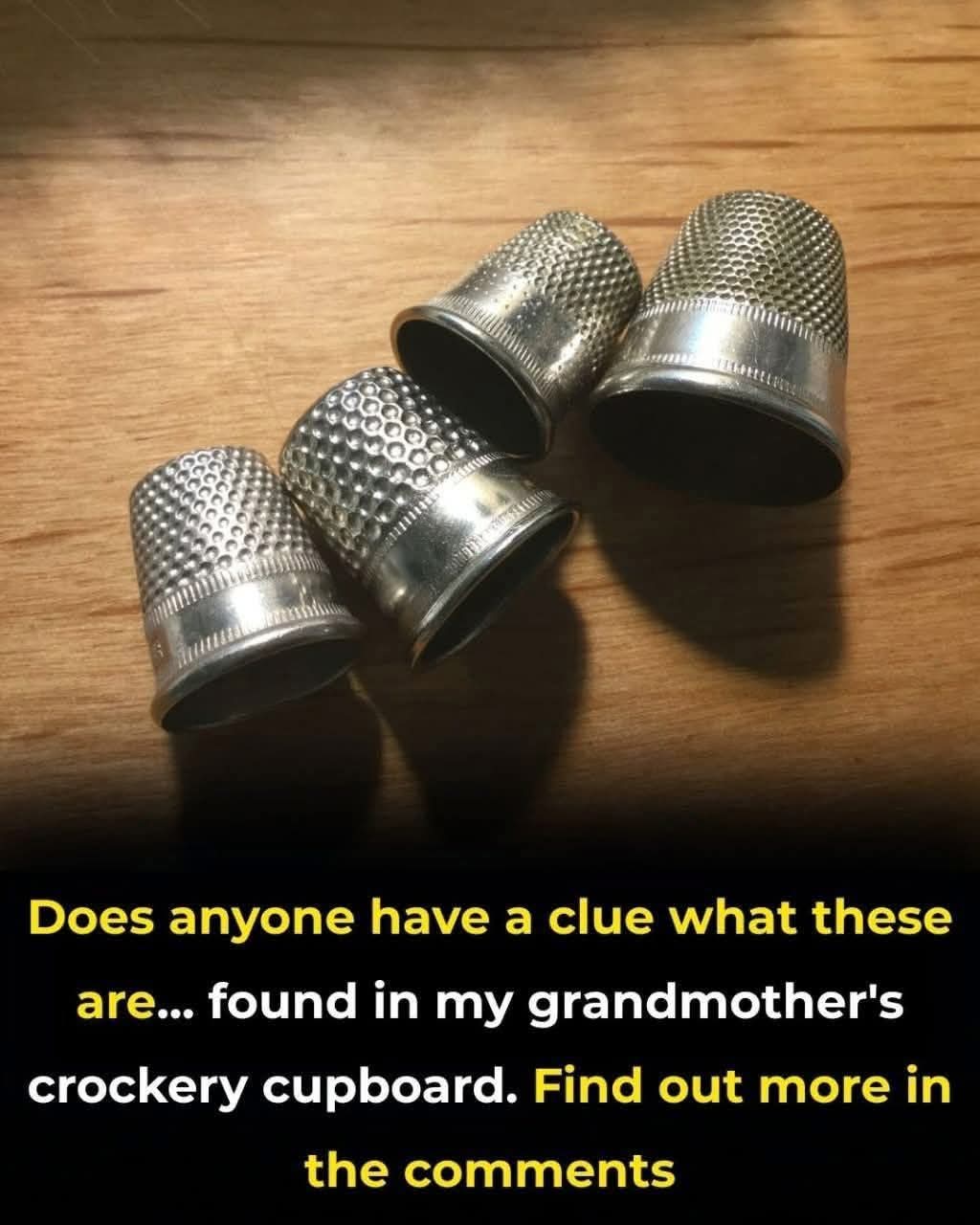
What Are These The Fascinating History of Vintage Sewing Thimbles Found in Grandma’s Cupboard
In the age of fast fashion, instant digital connectivity, and mass-produced household items, stumbling upon a cache of mysterious, tiny metal objects in an old family cabinet can feel like uncovering buried treasure. A common viral social media post features an image of small, pitted metal caps with a caption reading: “Does anyone have a clue what these are… found in my grandmother’s crockery cupboard.” For anyone who grew up around traditional needlework, the answer is instantaneous, but for younger generations, these curious objects open a fascinating window into the history of domestic life, craftsmanship, and the evolution of textile arts.
These small, dimpled metal caps are sewing thimbles. For centuries, a thimble was an indispensable personal tool found in nearly every household across the globe. Often passed down through generations as cherished family heirlooms, thimbles tell a rich story of practical necessity, industrial innovation, and deeply sentimental connections to the women who used them. In this comprehensive article, we will explore the practical anatomy of the humble thimble, trace its incredible historical journey from ancient bone to fine silver, uncover why they frequently hide away in kitchen cupboards, and explain how to identify and care for these miniature pieces of social history.
The Practical Anatomy of a Thimble: Why Do They Have Dimples?
To the untrained eye, a thimble might look like a simple, decorative metal cap, but its design is an absolute masterclass in functional engineering. The primary purpose of a thimble is to protect the fingertip—specifically the middle finger or thumb, depending on the sewing technique—from being repeatedly punctured or bruised while pushing a heavy needle through dense, tough fabrics like wool, canvas, leather, or multiple layers of linen.
The most distinctive feature of any standard thimble is its heavily textured exterior, completely covered in small, systematic indentations or pits. These pits are not decorative; they are called “dimples” or “knurling.” When a tailor or seamstress applies pressure to the blunt eye-end of a steel sewing needle, the end of the needle seats perfectly inside one of these tiny indentations. This crucial design feature prevents the needle from slipping off the slick metal surface of the thimble, which could cause a painful injury or damage the delicate fabric being worked on. Additionally, the slightly flared rim at the bottom of the thimble keeps it snugly securely on the finger, balancing weight and dexterity perfectly.
A Journey Through Time: The Global History of the Thimble
The history of the thimble is nearly as old as the history of human clothing itself. Long before the invention of modern metallurgy, humans required a way to shield their fingers while binding animal skins together. Archaeologists have discovered primitive thimbles crafted from a striking variety of natural materials, including hollowed-out animal bone, ivory, tough leather, wood, and even hardened prehistoric stone.
As civilizations advanced, the production of thimbles evolved alongside the mastery of metalworking, transforming these practical objects into symbols of status, trade, and artistry.
Ancient Roots and the Rise of Brass
The earliest known metal thimbles date back to the Han Dynasty in China, roughly over two thousand years ago, where simple metal rings were utilized to guide heavy needles through thick silk embroidery. The tool eventually traveled along ancient trade routes into the Mediterranean and Europe. By the medieval period, the production of brass thimbles became a major industry, particularly in places like Nuremberg, Germany, and later in the Netherlands.
These early European thimbles were cast from molten brass, making them thick, heavy, and highly durable. They were essential gear for sailmakers, cobblers, and domestic households alike, where every single piece of clothing had to be spun, woven, cut, and stitched entirely by hand.
The Golden Age of Fine Silver and Porcelain Thimbles
By the 18th and 19th centuries, the thimble experienced a spectacular cultural shift. With the introduction of mechanized stamping processes during the Industrial Revolution, thimbles could be manufactured out of thinner, lighter sheets of metal, drastically improving user comfort. This era marked the birth of the thimble as a luxury fashion accessory and a status symbol for upper-class women.
Silversmiths and goldsmiths began creating exquisite, intricately engraved thimbles made of sterling silver, solid gold, and mother-of-pearl. Renowned porcelain factories, such as Meissen in Germany and Wedgwood in England, produced delicate ceramic thimbles hand-painted with beautiful floral motifs, landscapes, and commemorative political scenes. These luxury thimbles were rarely used for heavy-duty utilitarian sewing; instead, they were proudly displayed in ornate sewing boxes or worn on chatelaines—decorative belt hooks worn by women to carry essential household tools—to signal a woman’s refinement, wealth, and domestic skill.
Why Are Sewing Thimbles Frequently Found in Kitchen Cupboards?
One of the most amusing mysteries surrounding vintage thimbles is their tendency to turn up in unexpected places, most notably in kitchen crockery cupboards, china cabinets, or spice drawers, rather than inside a traditional sewing basket. There are a few practical and historical reasons why Grandma’s old thimbles frequently migrate to the kitchen.
First and foremost, the old-school kitchen cupboard was historically the central organizing hub of the home. Before the advent of modern utility rooms or dedicated home offices, the kitchen cabinet was where important family keepsakes, keys, loose buttons, and small daily tools were stored for quick, easy access. Because a thimble is tiny and easily lost in a large basket, keeping a few reliable metal caps on a kitchen shelf ensured they were always within arm’s reach when a quick repair was needed, like fixing a torn apron or reinforcing a kitchen towel.
Secondly, thimbles frequently found alternative, highly practical uses in historic kitchens. Because they are food-safe, incredibly durable, and perfectly round, many home cooks repurposed old sewing thimbles as miniature biscuit cutters, pastry dough stamps, or tools for venting the crusts of homemade meat pies. Over time, these little tools simply became a permanent fixture of the kitchen landscape, nestled safely alongside the vintage teacups, mixing bowls, and heirloom recipe boxes.
How to Identify and Value Vintage or Antique Thimbles
If you have discovered a collection of old thimbles in a relative’s home, you might be curious to know more about their origin, age, and potential value. While millions of basic brass and aluminum thimbles were mass-produced throughout the 20th century, certain pieces are highly sought after by “digitabulists”—the official term for passionate collectors of thimbles. Here is what to look for when evaluating an old thimble:
Examine the Maker’s Marks and Hallmarks
High-quality vintage and antique thimbles, particularly those made of sterling silver or gold, will almost always feature small stamped markings along the inside rim or around the exterior band. Look closely under a magnifying glass for a purity stamp (such as “925” for sterling silver, or a traditional British lion passant hallmark). You may also spot a manufacturer’s mark or a specific size number, typically ranging from 5 to 12. Famous manufacturers like Simons Brothers in the United States or Charles Iles in Birmingham, England, are highly prized by modern collectors.
Look for Unique Materials and Craftsmanship
While standard steel or aluminum thimbles hold immense sentimental value as family keepsakes, thimbles made from unusual materials carry significant historical and financial value. Look out for thimbles featuring beautiful cloisonné enamel work, carved tortoiseshell, vulcanite, or early forms of colorful celluloid and bakelite plastic from the 1920s and 1930s. Commemorative thimbles, created to mark historic events like royal coronations, world’s fairs, or military victories, are also highly collectible.
Preserving and Caring for Heirloom Thimbles
To ensure that these small pieces of family history survive beautifully for future generations, proper preservation and cleaning techniques are essential. The cleaning approach depends heavily on the specific material of the thimble:
- Sterling Silver and Brass: Avoid using harsh, abrasive chemical cleaners or stiff brushes, which can permanently scratch the metal or wear down the delicate dimples. Instead, use a soft microfiber cloth dampened with a tiny drop of mild dish soap and warm water to gently remove decades of surface dust and fingerprint oils. Dry the thimble thoroughly immediately. For silver, a specialized jewelry polishing cloth will safely restore its original brilliance.
- Aluminum and Steel: Older iron or steel thimbles are highly susceptible to rust if exposed to moisture. Store them in a cool, completely dry place. If minor rust is present, a gentle rub with a soft toothbrush dipped in a drop of mineral oil can help lift the corrosion without compromising the integrity of the underlying metal.
- Celluloid and Early Plastics: These early synthetic materials are incredibly sensitive to extreme temperature changes, direct sunlight, and moisture. Store them away from bright windows and never submerge them in hot water, as this can cause the material to warp, crack, or degrade over time.
Conclusion: Honoring the Stitches of the Past
Finding a cluster of old metal thimbles in a grandmother’s cupboard is far more than a curious trivia moment; it is a direct, tangible link to the everyday lives, resilience, and artistry of the women who came before us. Whether they were used to meticulously embroider fine linens, patch up worn work clothes during difficult times, or simply stamp out pastry dough on a busy kitchen counter, these tiny, dimpled caps represent an era when objects were built to last and care was poured into every stitch.
The next time you spot a social media post wondering what these mysterious objects are, you can smile knowing the profound history behind them. If you are fortunate enough to inherit a few of these beautiful pieces of household history, display them proudly on a shelf or keep them tucked safely in a keepsake box. They serve as a wonderful, enduring tribute to family heritage, manual skill, and the quiet beauty of traditional domestic craftsmanship.